Do you expect to be able to generate admissible evidence from a face-to-face conversation?
From Whatsapp blog:
End-to-end encryption helps make communication via WhatsApp private – sort of like a face-to-face conversation.
Comentarios desactivados en «[S]ort of like a face-to-face conversation.»
Según informan en Reuters los operadores de Brasil han bloqueado Whatsapp durante 48h por orden de una Juez del Tribunal Estatal de Justicia de São Paulo. Al parecer se debe al incumplimiento de la empresa de Mountain View de reiteradas comisiones rogatorias en el seno de un asunto por tráfico de drogas.
Subyace al parecer también un conflicto con los operadores locales por la funcionalidad de llamadas de la aplicación. Por lo pronto parece que Telegram ha ganado 1,5M de usuarios en dos días.
No tengo presentes estadísticas al respecto de situaciones similares en España. Para blanqueo de capitales hay algunos porcentajes de cumplimiento en la Memoria de Información Estadística 2010-2012 de la Comisión de Prevención del Blanqueo de Capitales e Infracciones Monetarias (ver p39 de la memoria).
La muestra de la que dispongo para delitos más graves es muy reducida, pero en la investigación de delitos patrimoniales la respuesta (o la falta de ella) de muchos proveedores globales les llevaría al bloqueo más pronto que tarde de actuarse con esta contundencia.
Comentarios desactivados en Whatsapp bloqueado en Brasil
As some of you may remember, in January 2011 Puerto 80 S.L.U. got seized its domains rojadirecta.com and rojadirecta.org.
Yesterday August 29th, The Honorable Paul A. Crotty, District Judge at the Southern District of New York, ordered the warrants of seizure to be vacated and the domains returned.
Previously, the same day, the District Attorney Preet Bharara submitted a letter to advise the Court that “…as a result of certain recent judicial authority involving issues germane to the above-captioned action, and in light of the particular circumstances of this litigation, the Government now seeks to dismiss its amended forfeiture complaint.”
I guess the “certain recent judicial authority involving issues germane to the above-captioned action” are Flava Works, Inc. v. Gunter, — F.3d —-, 2012 WL 3124826 (7th Cir. Aug. 2, 2012) cited in a Notice of Supplemental Authority submitted to the court by the defendants last August 8th.
It literally says:
The court concluded that that the plaintiff was not likely to succeed on its claim that the “myVidster” website was liable for direct or contributory copyright infringement by hosting and embedding links to infringing copies of the plaintiff’s videos, which were not hosted by myVidster.
The Flava Works opinion supports the position that the seized domain names are neither committing, enabling or assisting infringement by engaging in the conduct alleged by the government in the Amended Complaint. The Seventh Circuit explained that because watching a streaming video is not infringement (any more than sneaking into a theater and watching a copyrighted movie is infringement), providing a link to where a streaming video is hosted does not encourage or assist infringement.
See also arstechnica and the full saga at techdirt.
Comentarios desactivados en Puerto 80 will have its domains back
Comentarios desactivados en Neil Armstrong, 1930-2012
From BoingBoing, Xeni writes:
What’s interesting about this interview, in light of the «It’s a Girl Thing!» flap: Seltzer does think that image—the messages people get about what a computer engineer has to be like—makes a big difference in who decides they want to be a computer engineer. Which is basically the same idea «It’s a Girl Thing!» was trying (poorly) to address. Unfortunately, the EU video ended up being all image and no substance, and worse, it added to the image problem by telling people what girls are supposed to be like. (By that video’s definition, I am not a lady.)
Comentarios desactivados en Public image, self-image, and women in computer science
When the Internet was created, decades ago, one thing was inevitable: the war today over how (or whether) to control it, and who should have that power. Battle lines have been drawn between repressive regimes and Western democracies, corporations and customers, hackers and law enforcement. Looking toward a year-end negotiation in Dubai, where 193 nations will gather to revise a U.N. treaty concerning the Internet, Michael Joseph Gross lays out the stakes in a conflict that could split the virtual world as we know it.»
Vanity Fair via Schneier.
Comentarios desactivados en World War 3.0
Atlanta-based CC payment processor Global Payments confirmed past friday a breach in (part of) their processing system that may affect up to 10M credit cards. The same day Visa released his own statement.
See also.
Via arstechnica.
Comentarios desactivados en CC payment processor breached
But this time, the company that received the request pushed back. It told the agency that it wanted to tell its customer that he or she was being targeted, which would give the customer a chance to fight the request in court, as a group of Twitter users did last year when the Justice Department sought their records under a different kind of request. The minor defiance in this latest case was enough to land the NSL request in a federal court docket last Friday, where the government filed a request for a court order to force the company to adhere to the gag order.
In its petition, the government asserted that disclosure of the fact or contents of its NSL “may endanger the national security of the United States” and urged the court to issue an order binding the company to the nondisclosure provision, or be in violation of federal law and face contempt charges.»
Via WIRED.
Comentarios desactivados en National Security Letters
Three of the IP addresses used by the servers that controlled the compromised systems observed by SecureWorks also overlapped with addresses that hosted servers used in attacks last year on RSA. The attackers used their access to RSA’s systems to steal highly sensitive data related to the company’s two-factor SecurID authentication tokens that 40 million employees use to access corporate and government networks. The IP addresses belong to the China Beijing Province Network’s autonomous system 4808, which researchers say has long been a hotbed for espionage-related malware.»
arstechnica‘s Dan Goodin coments on this report from DELL SecureWorks.
See also this, this, and this.
APT.
Ralph Langner made a great presentation of his results on investigating Stuxnet at Digital Bond’s SCADA Security Scientific Symposium that was held in Miami last January 18-19, 2012.
One quote:
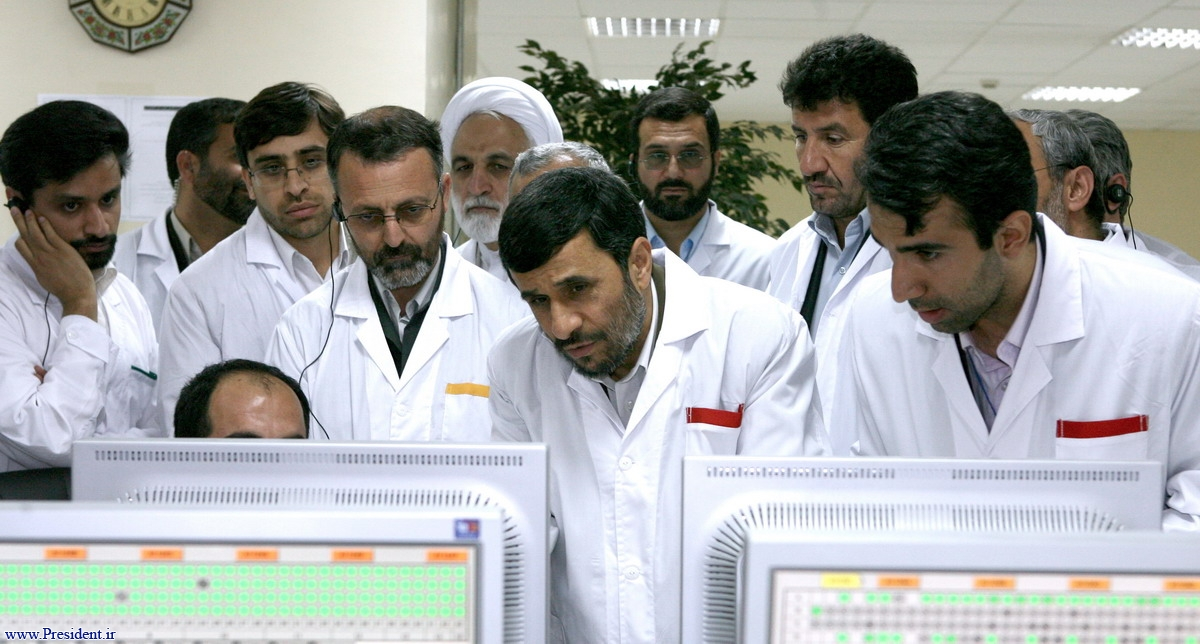
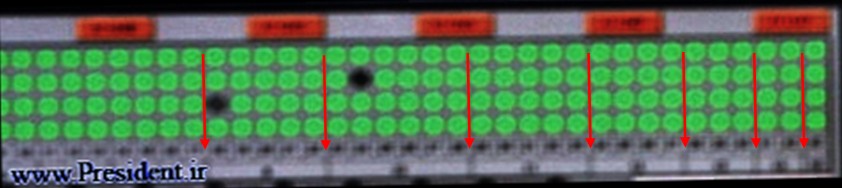
… the president is also kind enough to show us Scada screens…» (min. 26)


And a remark, min. 57:30: how quality assurance from vendors compares to the one used by the attackers…
From Digital Bond.
Comentarios desactivados en Ralph Langner’s Stuxnet Deep Dive